Trying to choose between Lincoln and Roseville for your next move? You are not alone. These two South Placer cities sit close together and share a similar home price range, but they can feel very different in daily life. If you are weighing commute options, housing styles, lot sizes, and everyday convenience, this guide will help you compare what matters most so you can move forward with more confidence. Let’s dive in.
Lincoln and Roseville at a Glance
Lincoln and Roseville are neighboring markets in South Placer, but they operate at very different sizes. Lincoln’s 2025 population estimate is 57,367, while Roseville’s is 167,302. That size gap shows up in everything from retail options to transportation choices.
Even with that difference, home prices are in a similar range. In March 2026, the median sale price was $632,000 in Lincoln and $625,000 in Roseville. Both markets were described as very competitive, with homes typically going pending in about 21 days in Lincoln and 19 days in Roseville.
That means your decision may come down less to headline pricing and more to how you want your day-to-day life to feel. For many buyers, the real question is not, “Which city is cheaper?” It is, “Which city fits my routine, home style, and long-term goals?”
Home Prices Are Closer Than You May Expect
If you assumed Roseville would cost much more than Lincoln, the current data does not really support that. The two cities are in the same general price band, at least based on recent median sale prices and owner-occupied home values.
Census QuickFacts shows median owner-occupied values of $628,500 in Lincoln and $661,400 in Roseville. That tells you Roseville runs somewhat higher in long-run value, but not by a dramatic margin. In practical terms, both cities can be realistic options for buyers shopping in the same broad budget range.
This is helpful because it gives you room to focus on lifestyle. Instead of stretching your search based on assumptions, you can compare housing types, neighborhood layout, commute options, and convenience with a clearer view of the tradeoffs.
Lincoln Housing Feels More Suburban
Lincoln tends to appeal to buyers who want a more subdivision-oriented setting with a stronger owner-occupant feel. Census data shows an owner-occupied rate of 83.5% in Lincoln, compared with 68.8% in Roseville. That does not tell the whole story, but it does point to a market with a more ownership-heavy character.
Lincoln’s planning documents also emphasize detached single-family homes across several lot sizes. In Twelve Bridges, the city identifies low-density detached homes on 20,000-, 10,000-, 8,000-, and 5,000-square-foot lots. Higher-density areas can still include smaller detached homes, attached homes, townhomes, and apartments, but detached suburban homes remain a big part of the city’s identity.
For buyers who want newer master-planned neighborhoods, more traditional suburban layouts, and a quieter rhythm, Lincoln often lines up well. If a larger yard or a more classic detached-home setup is high on your list, Lincoln deserves a close look.
Roseville Offers More Housing Variety
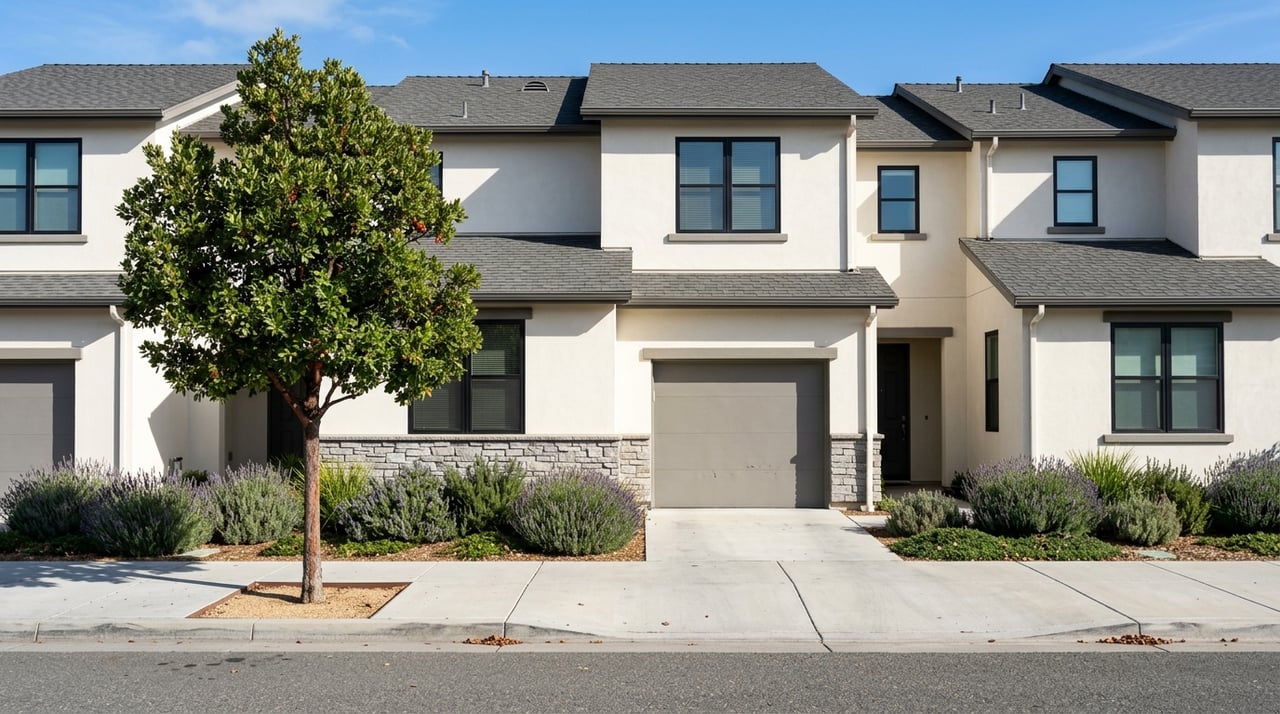
Roseville has a broader housing mix and a more layered neighborhood pattern. According to the city’s housing element, the housing stock includes a large detached-home share, a smaller attached-home share, a meaningful multi-family share, and a very small mobile-home share. The city also notes that neighborhoods range from historic areas to new construction.
That wider mix can be useful if your home search is flexible. You may be comparing a newer suburban home, an attached property with less exterior upkeep, or a location that puts you closer to shopping and services. In West Roseville, some single-family configurations allow minimum lot sizes as small as 3,600 square feet for interior lots and 4,400 square feet for corner lots.
This does not make Roseville better or worse. It simply means you may see more variation in home type, lot form, and neighborhood layout. If you want more options within one city, Roseville may give you a wider menu.
Commute Options Differ Between Cities
Commute and transportation can shape your quality of life just as much as the home itself. Lincoln’s mean travel time to work is 29.8 minutes, while Roseville’s is 27.3 minutes. That is not a huge gap, but the bigger difference is in how each city supports travel.
Lincoln contracts with Placer County for Commuter Express, Dial-A-Ride, and School Tripper service. The city also emphasizes a walkable downtown and NEV or golf-cart routing, which points to a local mobility style centered more on short neighborhood trips and local circulation.
Roseville has a more robust transportation network. The city offers fixed-route local service, weekday express commuter routes to downtown Sacramento, on-demand Arrow service, and regional connections to Placer County Transit and Sacramento Regional Transit. Roseville planning materials also note Amtrak and Capitol Corridor service at Roseville Station, along with 10 bus routes and 13 park-and-ride lots.
If you want a stronger transit and rail toolkit, Roseville has the edge. If your routine is more car-based and you value local short-trip convenience, Lincoln may feel more natural.
Daily Convenience Is a Big Deciding Factor
One of the clearest differences between Lincoln and Roseville is how each city handles errands, shopping, and dining. Roseville is the larger retail hub by a wide margin. The city describes itself as the region’s retail center and highlights the Westfield Galleria at Roseville, the Fountains at Roseville, and a broad mix of restaurants and retailers.
The retail-sales numbers underline that scale. Roseville recorded $6.44 billion in total retail sales in 2022, or $41,301 per capita. Lincoln recorded $468.9 million, or $8,876 per capita.
That does not mean Lincoln lacks convenience. It means the experience is different. Lincoln’s lifestyle is more centered on its historic downtown, where the city describes Downtown Lincoln as the heart of the community, with Beermann Plaza as a central gathering place, along with downtown shops and events.
Planning for Twelve Bridges also points to a walkable or bikeable Main Village with shopping, employment, community facilities, and nearby residential neighborhoods. The city also identifies shopping centers such as Lincoln Crossing Marketplace, SterlingPoint Center, and Lincoln Village at Twelve Bridges.
If you want frequent access to major retailers, chain dining, and regional shopping in one city, Roseville stands out. If you prefer a smaller-town downtown feel and more compact errand patterns, Lincoln may be the better fit.
Lifestyle Questions to Ask Yourself
When prices are close, the smarter comparison is often about lifestyle fit. Start by thinking about how you want an average Tuesday to feel, not just how you want move-in day to feel.
Ask yourself:
- Do you want a broader mix of home types, or are you mainly looking for a detached suburban home?
- Is a larger or more traditional lot important to you?
- How often do you rely on transit, rail, or commute alternatives?
- Do you want to be near major shopping and dining options?
- Would you rather live in a city with a smaller-town downtown feel?
- Are you drawn to newer master-planned neighborhoods?
Your answers can quickly narrow the choice. Buyers often get stuck comparing square footage and price, but the better move is to compare how each city supports your routine.
Who Lincoln May Suit Best
Lincoln may be a strong fit if you are looking for:
- Newer master-planned neighborhoods
- A more owner-occupant-oriented feel
- Detached single-family homes in traditional suburban settings
- Larger or more conventional lot patterns
- A quieter day-to-day rhythm
- A local lifestyle centered around downtown Lincoln and neighborhood destinations
For many move-up buyers, Lincoln offers the feeling of a suburban home base with room to settle in. If that is your priority, it can be a compelling option.
Who Roseville May Suit Best
Roseville may be a better fit if you want:
- More housing variety across different neighborhood styles
- Easier access to major retail and dining
- Stronger transit, rail, and commuter options
- A larger city with more built-in daily convenience
- Neighborhoods that range from historic to newer construction
- Flexible options if lot size is less important than location and access
For buyers who value convenience, connectivity, and choice, Roseville often checks more boxes. It can be especially appealing if your schedule is busy and you want more services close at hand.
The Best Choice Depends on Your Routine
Lincoln and Roseville are both competitive South Placer markets with similar pricing, but they offer different living experiences. Lincoln leans more toward newer master-planned neighborhoods, detached homes, and a quieter suburban feel. Roseville leans more toward housing variety, major retail access, and a stronger transportation network.
That is why choosing your next home base is usually less about affordability and more about fit. The right answer comes from your commute, your housing preferences, your errand habits, and the kind of environment you want to come home to each day.
If you are comparing Lincoln and Roseville and want help narrowing down neighborhoods, home types, or resale considerations, Danny Tejeda can help you make a clear, data-informed decision.
FAQs
How do Lincoln and Roseville home prices compare?
- Recent market data shows they are in a similar range, with March 2026 median sale prices at $632,000 in Lincoln and $625,000 in Roseville.
Is Lincoln or Roseville better for commuting in South Placer?
- Roseville has the stronger commute toolkit, with local bus service, express commuter routes, on-demand service, regional transit connections, Amtrak and Capitol Corridor access, and multiple park-and-ride lots.
What kind of housing can you expect in Lincoln?
- Lincoln planning documents emphasize detached single-family homes in several lot sizes, especially in newer master-planned areas, though some attached homes, townhomes, and apartments are also part of the mix.
What kind of housing can you expect in Roseville?
- Roseville offers a broader mix that includes detached homes, attached homes, and multi-family housing, with neighborhoods ranging from historic areas to new construction.
Is Roseville better for shopping and dining than Lincoln?
- Roseville is the larger retail hub, with major shopping destinations and much higher total retail sales, while Lincoln offers a more compact experience centered around its historic downtown and neighborhood centers.
Which city has a quieter suburban feel, Lincoln or Roseville?
- Lincoln is generally the better match if you want newer master-planned neighborhoods, more traditional suburban lot patterns, and a quieter daily rhythm.